
Rural education in Guatemala by the numbers: who studies, how much they learn and what is missing
Published
Almost every child in Guatemala starts primary school, but many stop there: only 55.2% of adolescents are enrolled in lower secondary and 27.5% in upper secondary. In rural areas, 66.3% of people live in poverty and test scores are lower. These are the latest figures from Guatemala's Education Ministry, its statistics institute and UNICEF.
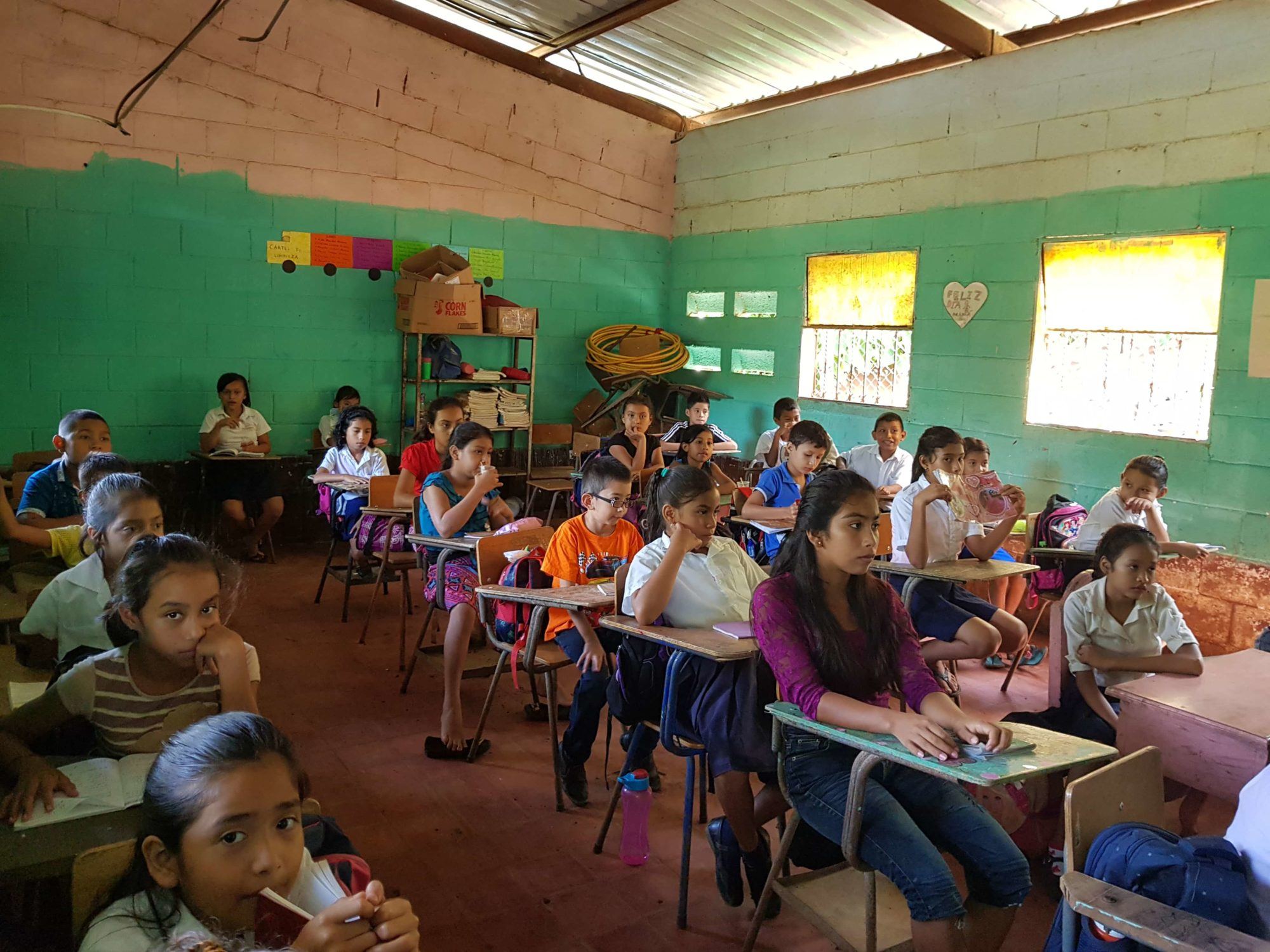
How many children go to school in Guatemala?
Guatemala's school system serves about 4 million students in more than 42,000 public and private schools (AGN, February 2026). Primary school enrollment is nearly universal, but it drops at every level after that:
- Early childhood: 90% of children aged 36 to 59 months do not attend any early education program.
- Lower secondary (básico, the three years after sixth grade): only 55.2% of adolescents are enrolled.
- Upper secondary (diversificado, which includes academic, technical and teacher-training tracks): 27.5%.
All three figures come from UNICEF's 2026 country programme document for Guatemala, which draws on the Education Ministry's statistical yearbook and the national ENDESA health survey. UNICEF notes that these gaps hit Indigenous, poor and rural children hardest.
How big is the gap between rural and urban education in Guatemala?
It starts with household income. According to the 2023 ENCOVI survey by INE, Guatemala's statistics institute, 66.3% of rural residents live in poverty, compared with 46.6% in urban areas. Schooling matters too: 68% of people with no formal education are poor, versus 9.9% of those with higher education (AGN).
The same pattern shows up in test scores. In the Education Ministry's 2024 assessment of high school seniors (Digeduca report):
- 37% of students at urban schools reached the expected level in reading, compared with 28% at rural schools.
- In math, it was 13% urban and 9% rural.
- Only 12.2% of the seniors tested attended a rural school, even though 46% of the population was rural in the 2018 census (Revista Análisis de la Realidad Nacional, University of San Carlos).
The foundation is fragile as well. In the 2018 census, 19.2% of people aged 15 and older could not read or write, and among women the figure was 23.3% (INE census table published by CONALFA, the national literacy committee).
How much are children learning in primary school?
The Education Ministry's 2024 National Primary Assessment tested a nationally representative sample of public schools. Here is the share of students who reached the expected level (Digeduca):
- Third grade: 41.7% in reading and 20.6% in math.
- Sixth grade: 35.9% in reading and 12.5% in math.
The picture is similar at the end of high school. In the 2025 assessment of seniors, 35.38% reached the expected level in reading and 16.2% in math nationwide. UNICEF adds that the share of students meeting the expected level is considerably higher in the wealthiest households than in the poorest.
What condition are Guatemala's public schools in?
The public system has 36,300 schools, and 84% of them serve preschool and primary grades. When the current government took office, it reported that 5,386 schools had no water service, 21,651 had no drainage, 8,587 had no electricity and 28,842 had no kitchen (Prensa Libre, November 2025).
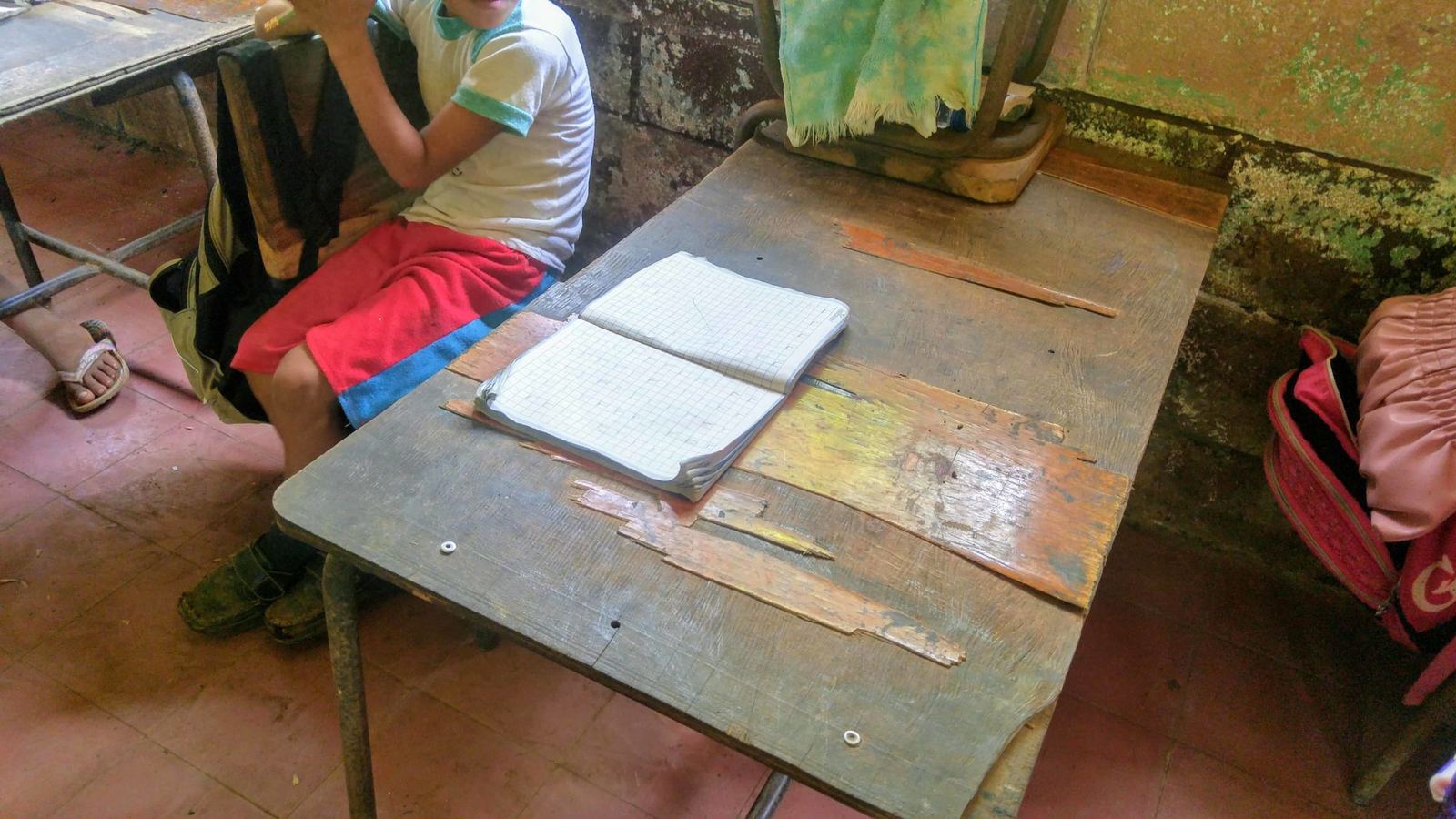
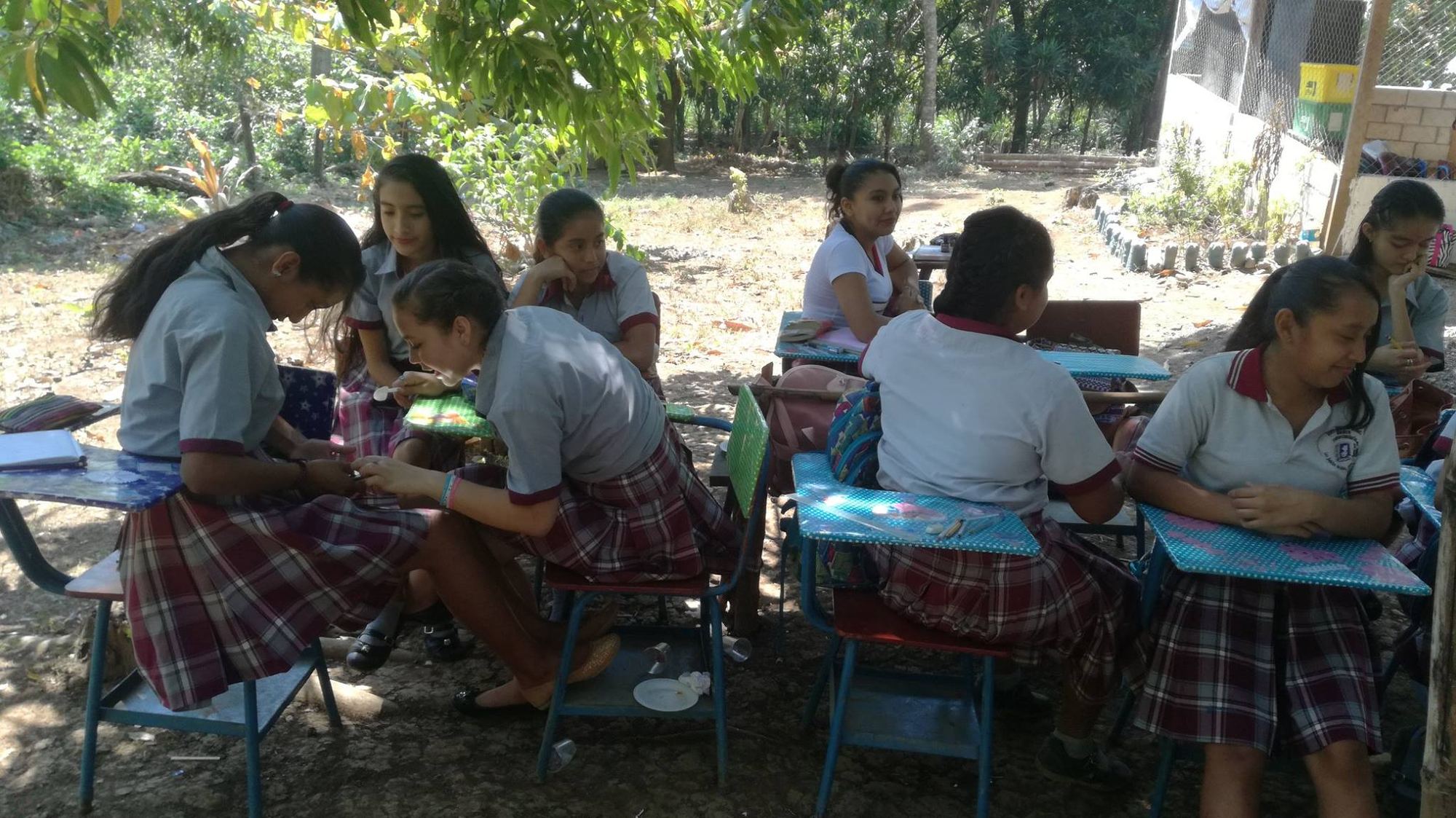
Photos from the schools Start with a Smile Project supports show classrooms with sheet-metal roofs, worn wooden desks and dirt yards that flood when it rains. In Las Delicias del Jobo, the project has helped bring electricity, a kitchen, toilets, roofs and more than 100 desks; we tell that story in our guide to Las Delicias del Jobo.
How much does Guatemala's government spend per student?
The Education Ministry transfers funds to each public school's parents' organization. These are the 2026 amounts (AGN), in quetzales:
- School meals: Q6 per student per day in preschool and primary, and Q4 in lower and upper secondary.
- School supplies: Q100 per preschool and primary student, and Q200 per secondary student, paid once a year.
- Free-education fund (gratuidad): Q50 per preschool and primary student, and Q75 per secondary student.
- Teaching materials: Q600 per teacher.
That helps, but it does not cover everything. A World Food Programme study cited by Prensa Libre found that school meals cover 62% of the cost of a nutritious food basket for preschool and primary students. And public social spending was 7.9% of GDP in 2023, compared with a regional average of 11.5%, according to the UNICEF document, citing ECLAC data.
Why don't more rural teens make it to secondary school?
Distance is one reason: many rural areas have no public secondary school nearby. For 2026, the Education Ministry announced 504 new public secondary schools (226 lower and 278 upper secondary) in rural and semi-rural areas with no public secondary option. They run in the afternoon in renovated primary school buildings (Prensa Libre). The deputy minister of education described the system as a coverage pyramid where many young people drop out along the way.
Girls face extra obstacles. UNICEF points to early unions, unplanned pregnancies, household chores, a lack of menstrual hygiene facilities and unsafe school environments, especially in rural areas. In Las Delicias del Jobo, the project's biggest challenge is exactly that: building a proper secondary school.
How can I help rural education in Guatemala?
National numbers become concrete in a single village. In Las Delicias del Jobo, in Taxisco, more than 700 children study in 7 schools, and every year Start with a Smile Project delivers school supplies to about 500 of them. What helps most right now:
- School supplies and backpacks before back to school.
- Desks and a computer.
- Support to build a proper secondary school.
You can donate through GoFundMe (a personal fundraiser, so not tax-deductible) or pack supplies in your suitcase and message us to arrange the handoff in Antigua Guatemala. Read about the project's mission, how to help Las Delicias and our guide on how to help children in Guatemala.
Sources
- UNICEF: Country programme document, Guatemala (E/ICEF/2026/P/L.22, advance copy, June 2026), citing Mineduc, INE and ECLAC data
- AGN: Deputy Minister Francisco Cabrera on the progress of education programs in 2026 (February 20, 2026, in Spanish)
- AGN: INE presents the results of ENCOVI 2023 (August 21, 2024, in Spanish)
- Mineduc, Digeduca: National report on the 2024 high school seniors assessment (in Spanish)
- Mineduc, Digeduca: General results of national assessments, Primary 2024 and Seniors 2025 (in Spanish)
- Revista Análisis de la Realidad Nacional (University of San Carlos): Urbanization and rural mobility, with 2018 census data (in Spanish)
- INE, 2018 Population and Housing Census: literacy of people aged 15 and older (table published by CONALFA, in Spanish)
- Prensa Libre: Public education ends 2025 with gaps in quality and coverage (November 17, 2025, in Spanish)
- Prensa Libre: How the 504 new secondary schools opening next year will work (December 12, 2025, in Spanish)
More guides
 Las Delicias del Jobo, Taxisco: the village, its 7 schools and what is still missingA village in Taxisco, Santa Rosa, on Guatemala's south coast: location, climate, how families live, its 7 schools, what has been done and what is missing.
 Back to school in Guatemala: when the school year starts and what kids needGuatemala's public schools started on February 2 in 2026, private schools on January 12. Official dates, what the state covers and what kids still need.
 How to Help Children in Guatemala: What Actually Works and Where to StartWhat children in rural Guatemala need and how to help: give on GoFundMe, pack school supplies in your suitcase, or share. Backed by UNICEF data.
Our projects
Help the Community of Las Delicias
The 7 schools are located in the village of Las Delicias Del Jobo, Taxisco, Guatemala, 90 kilometers from the capital.
Paint Smiles for Christmas
The most special time of the year is Christmas, and with it the opportunity to share and bring joy to hundreds of children.
How to help us
Whether through a donation, or because you decide to volunteer, or because you want to stop by while traveling in Guatemala and drop some gift, any help is welcome! #travelwithapurpose
- Travel With a Purpose
- How to help
- Finance our projects